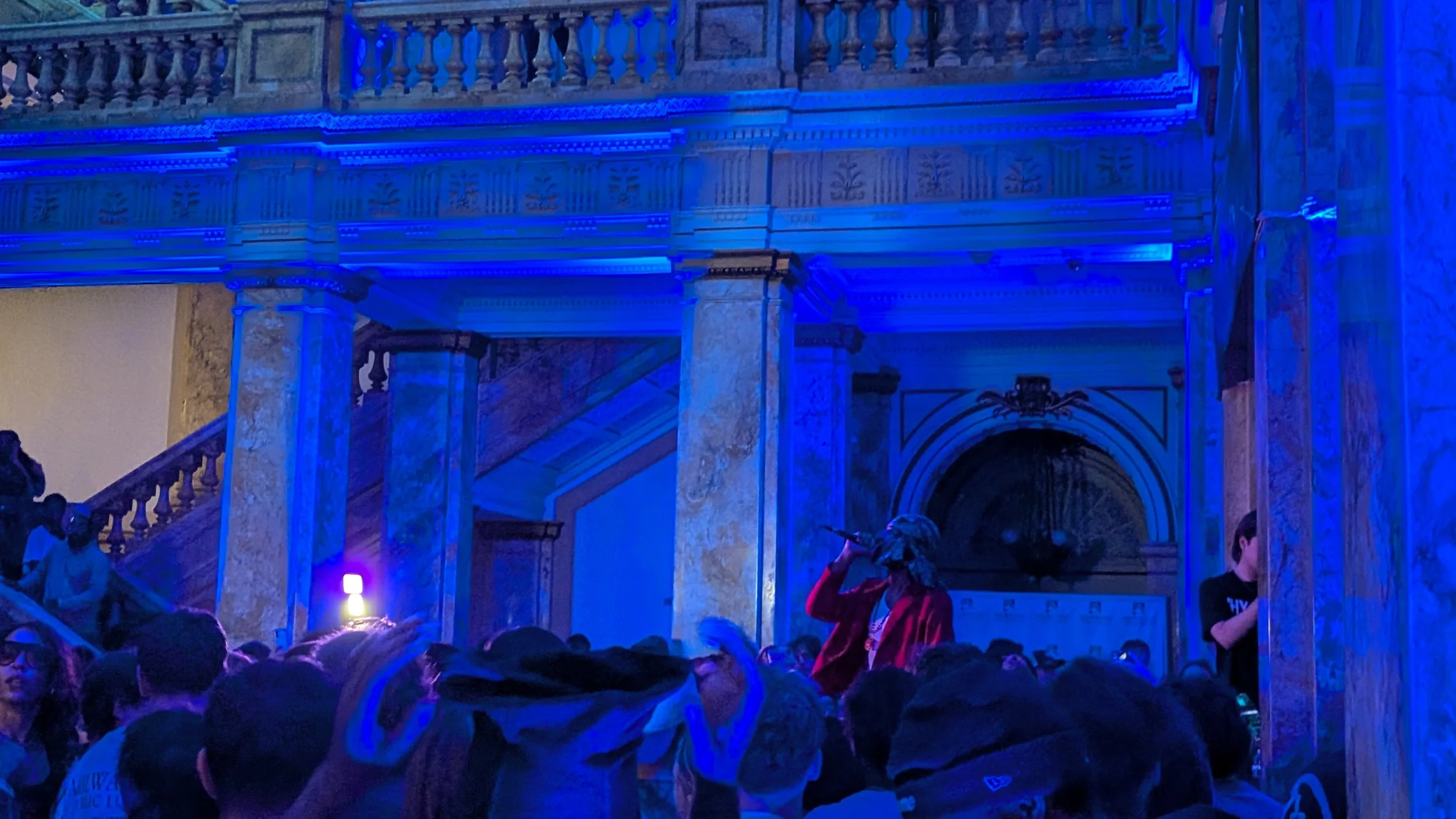
LIVE REVIEW: The Library Show
words by tristan engelmann, PHOTOS BY ELLEN ZHANG
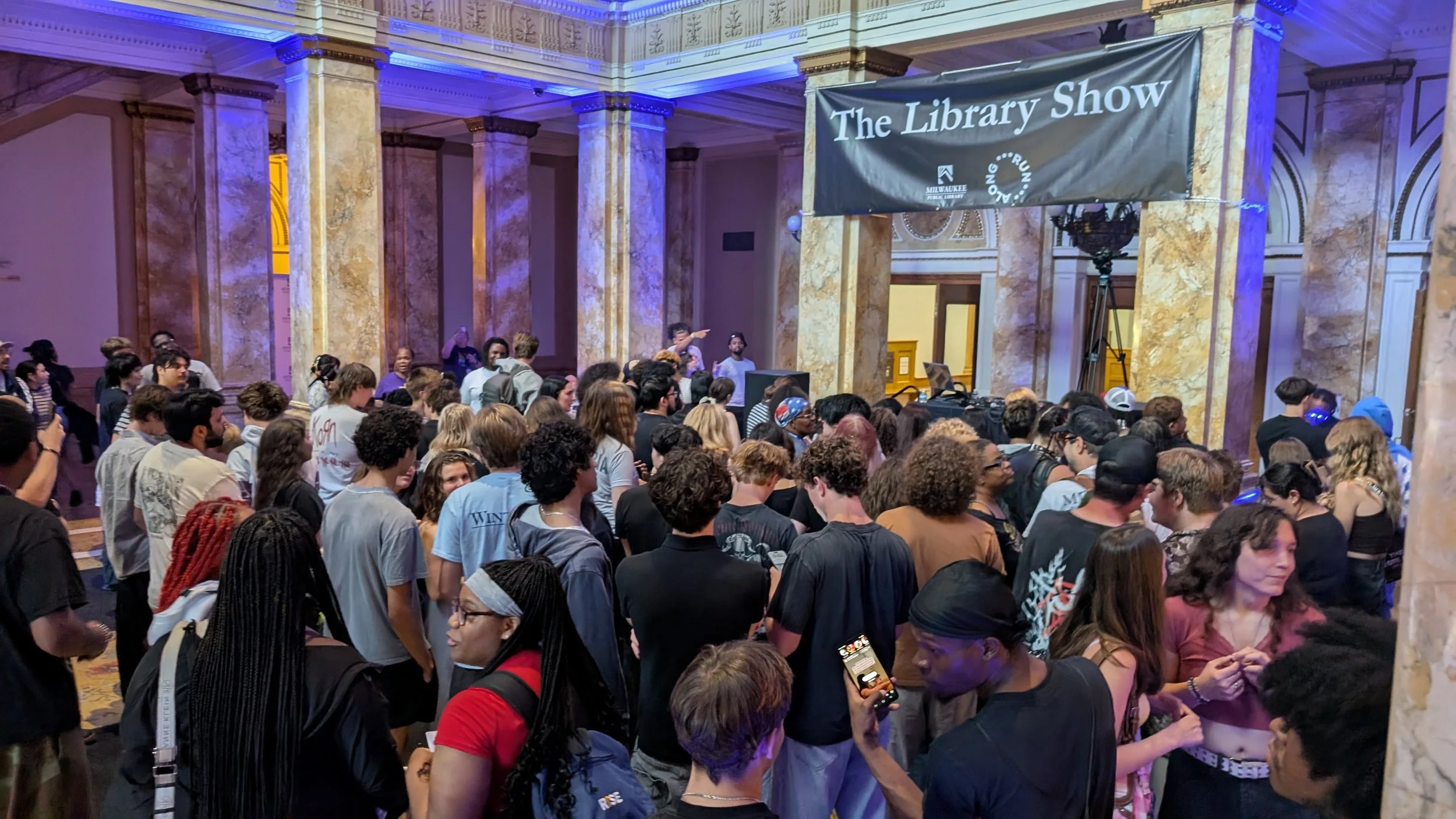
Constructed in 1895, the Milwaukee Central Library and its Grand Rotunda have been a landmark of the Cream City. Designed in a neo-classical style, the structure spans an entire city block in the Westown neighborhood. But on Sept. 3, the building was surrounded after hours for an event unlike anything in its history — The Library Show.
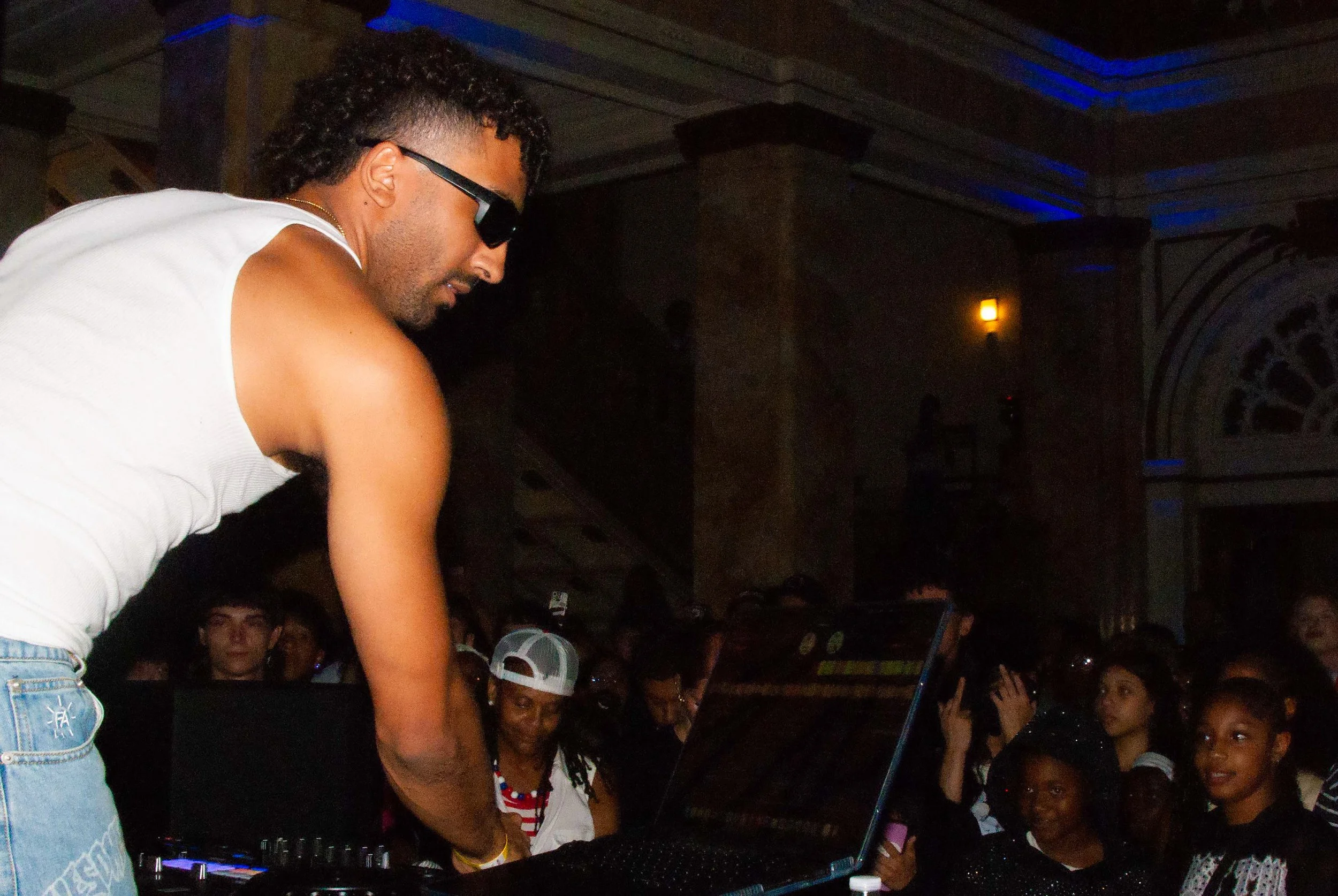
The bill featured DJs Sunny Lou, DJay Mando and r3algrl, alongside special guests 414BigFrank, Lightris & Sero, Sabbath and AyooLii. In a collaboration for Library Card Sign-up month, the Milwaukee Public Library partnered with Run Along Forever, a Milwaukee founded record label, to host local artists at a free entry, all-ages show. Run Along Forever started with Nolan Busalacchi (a UW-Madison alum) and Eli Stamstad filming hip-hop videos in Milwaukee — in the years since they have grown into a full-fledged label, booking shows and working with Milwaukee's most innovative artists.
In line behind us was a Brooklyn-born Milwaukeean who had come for the t-shirt. Behind him, a raucous gaggle of young teens stood in wait, excited to see their favorite artists. There was a cheer when the local Fox 6 anchor walked by, and another when self-proclaimed “Mayor of Milwaukee” Tommy Violet was spotted.
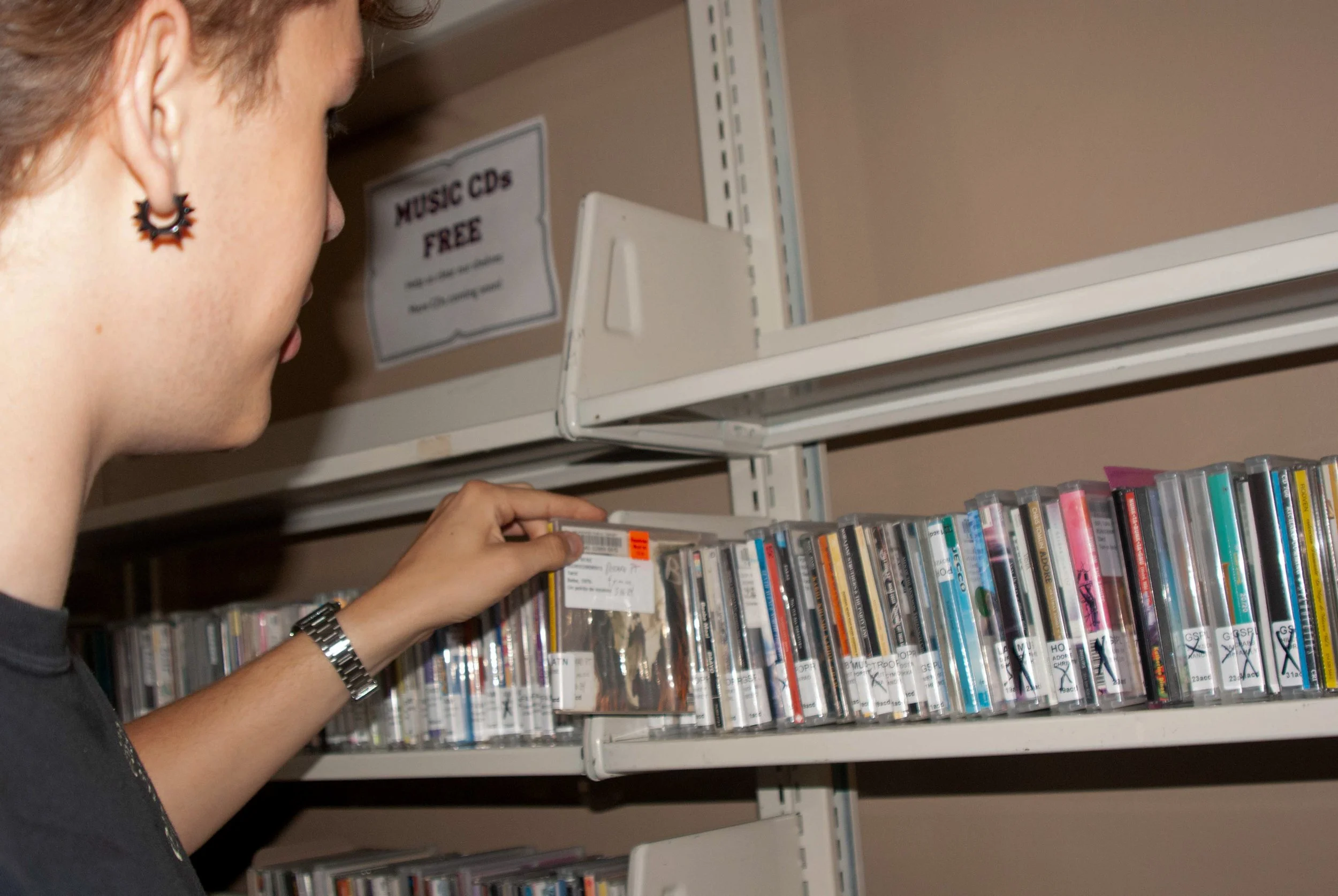
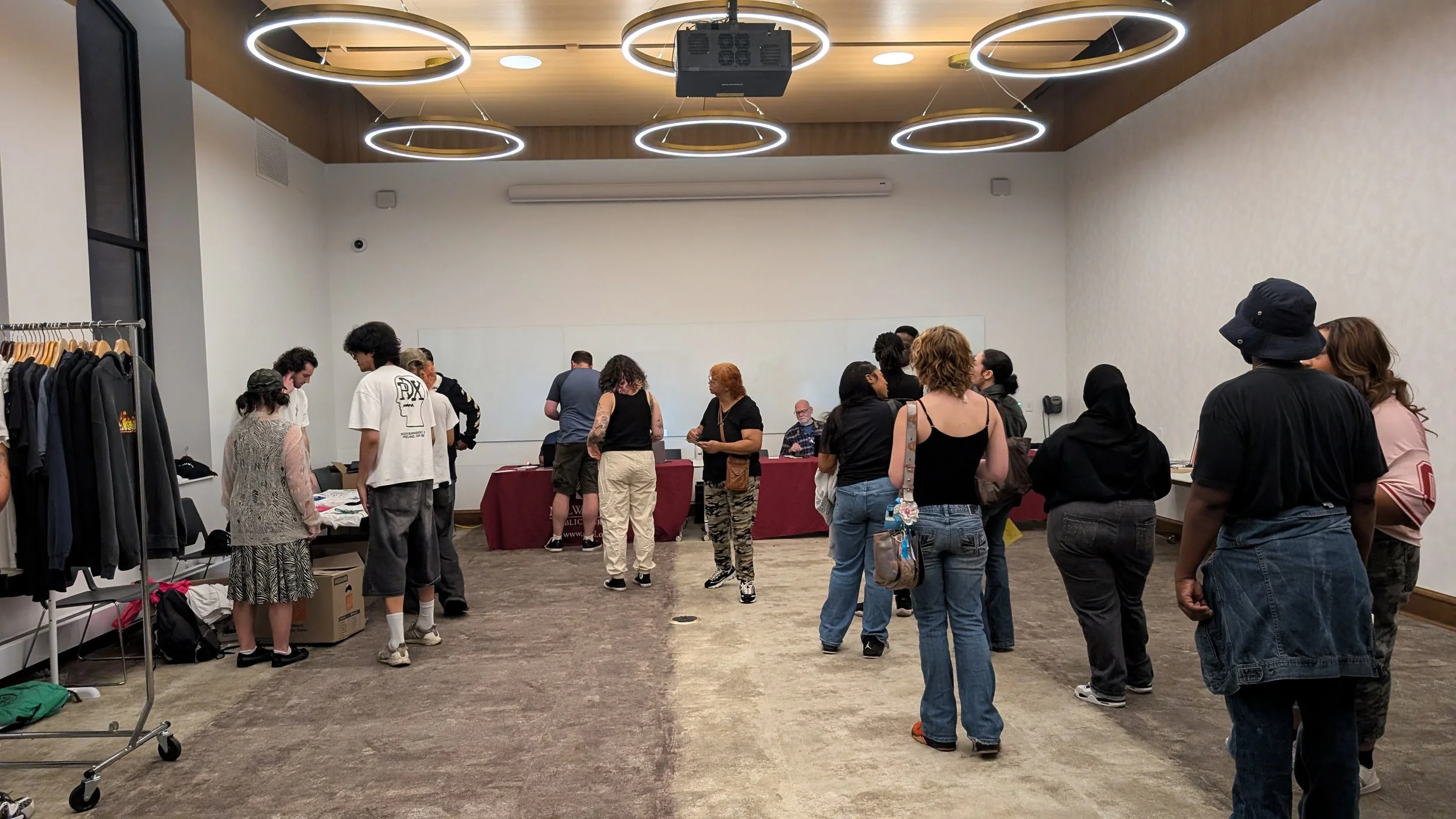
Once the doors opened, a line immediately formed leading to the library card sign-up stand. Everybody who signed up would receive a custom designed card commemorating the event, and the first 50 received an exclusive t-shirt. Across the hall at the library’s in-house used bookstore, The Bookseller, employees pointed us towards their free CD shelf. The employees seemed just as excited for the event as the crowd.
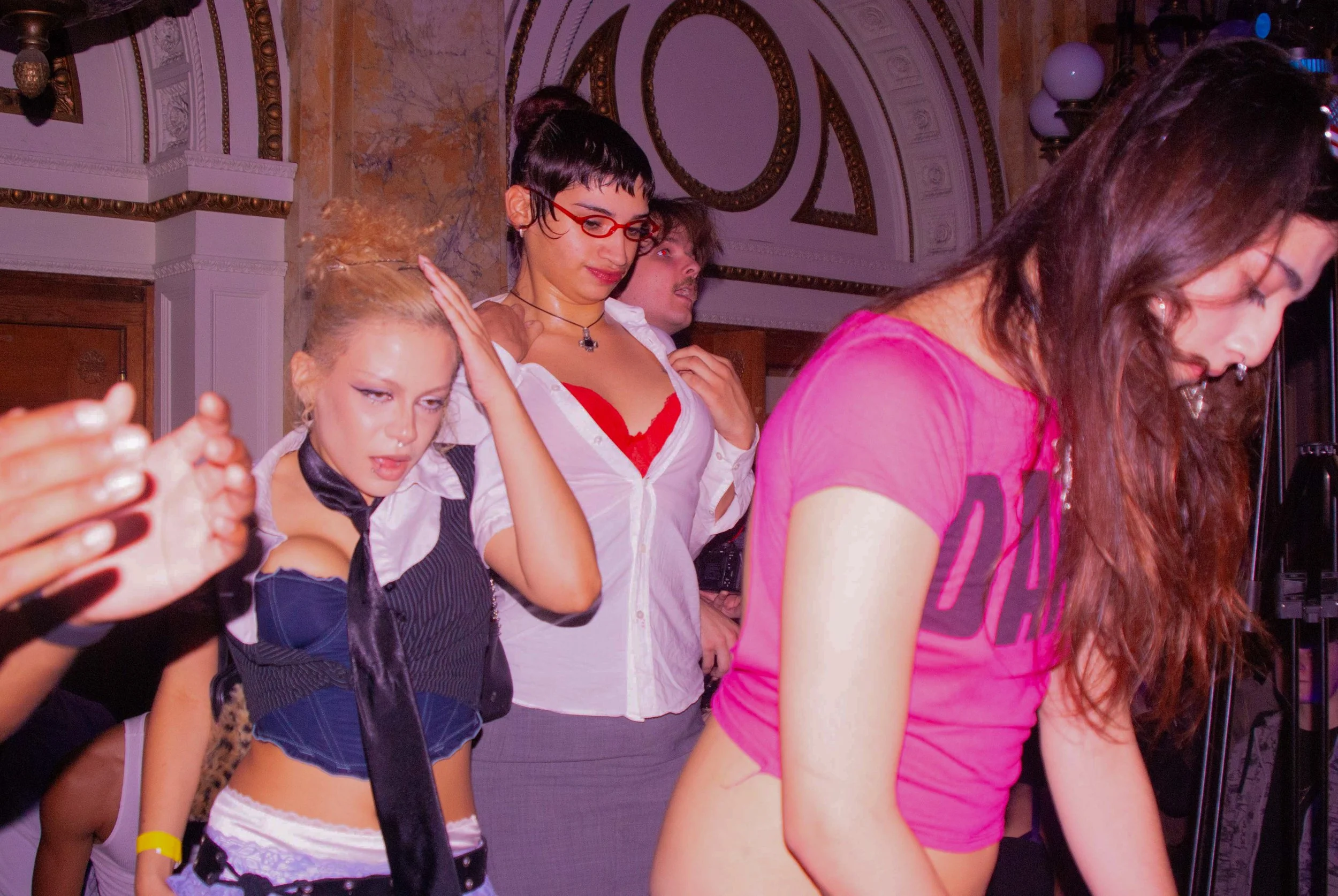
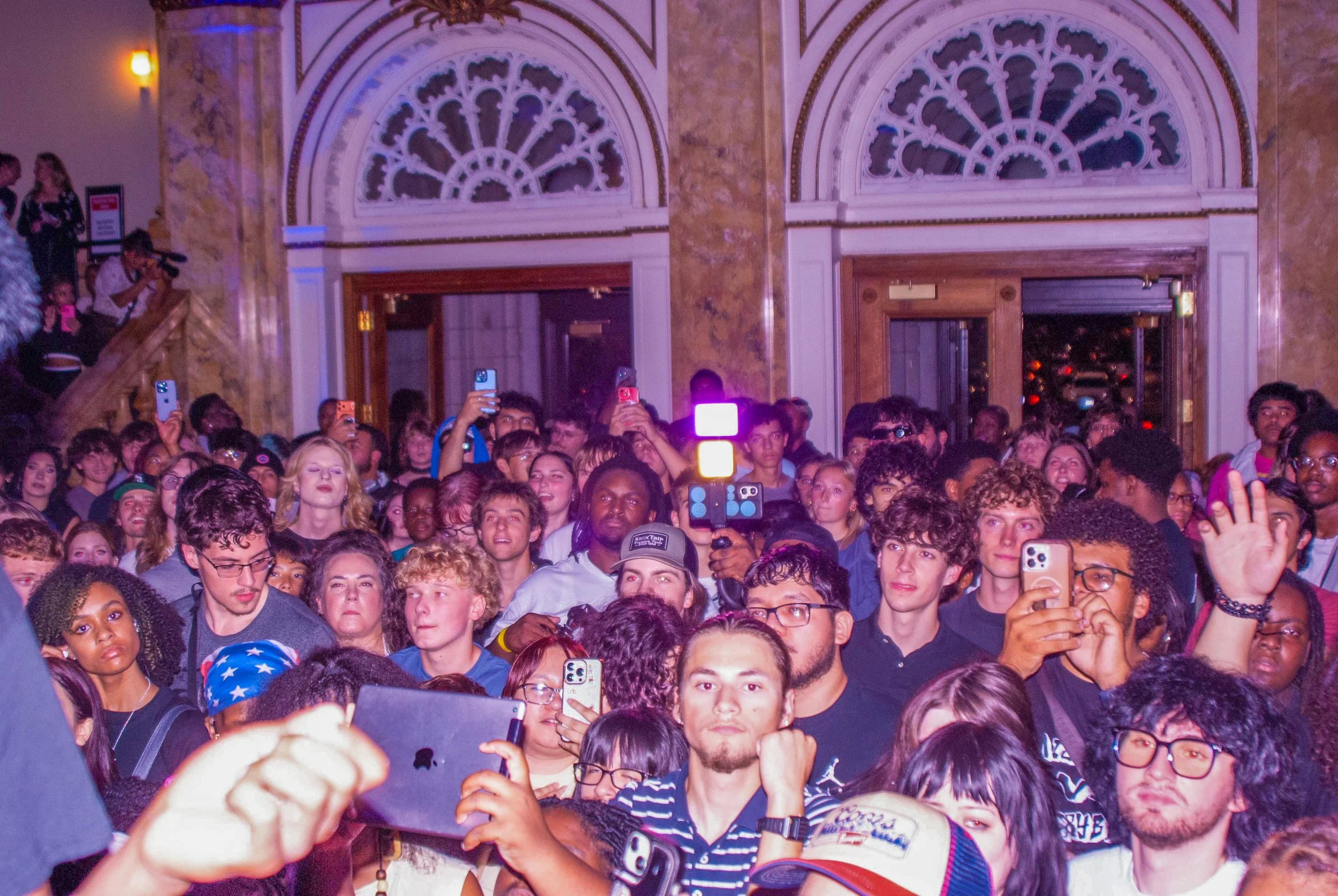
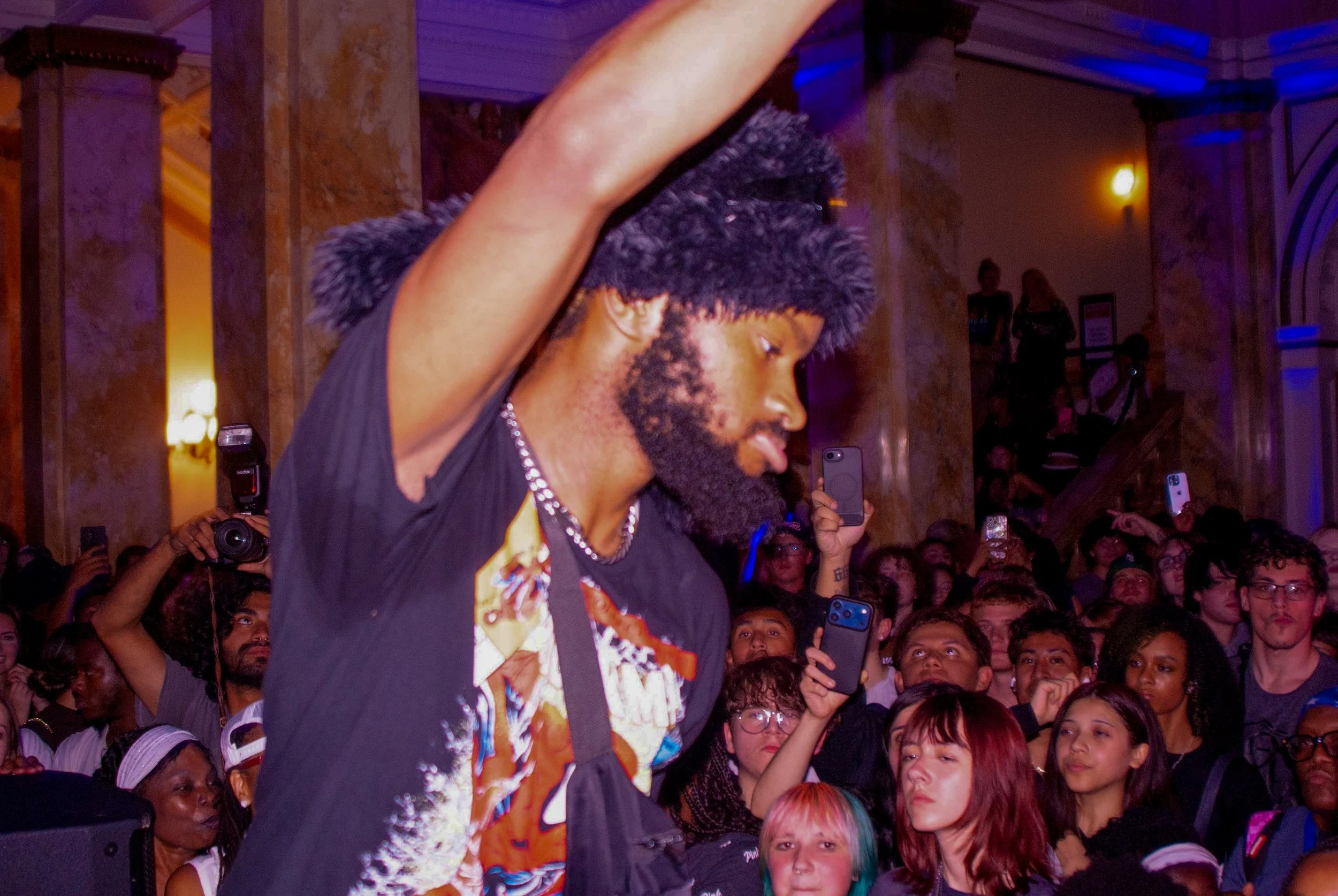
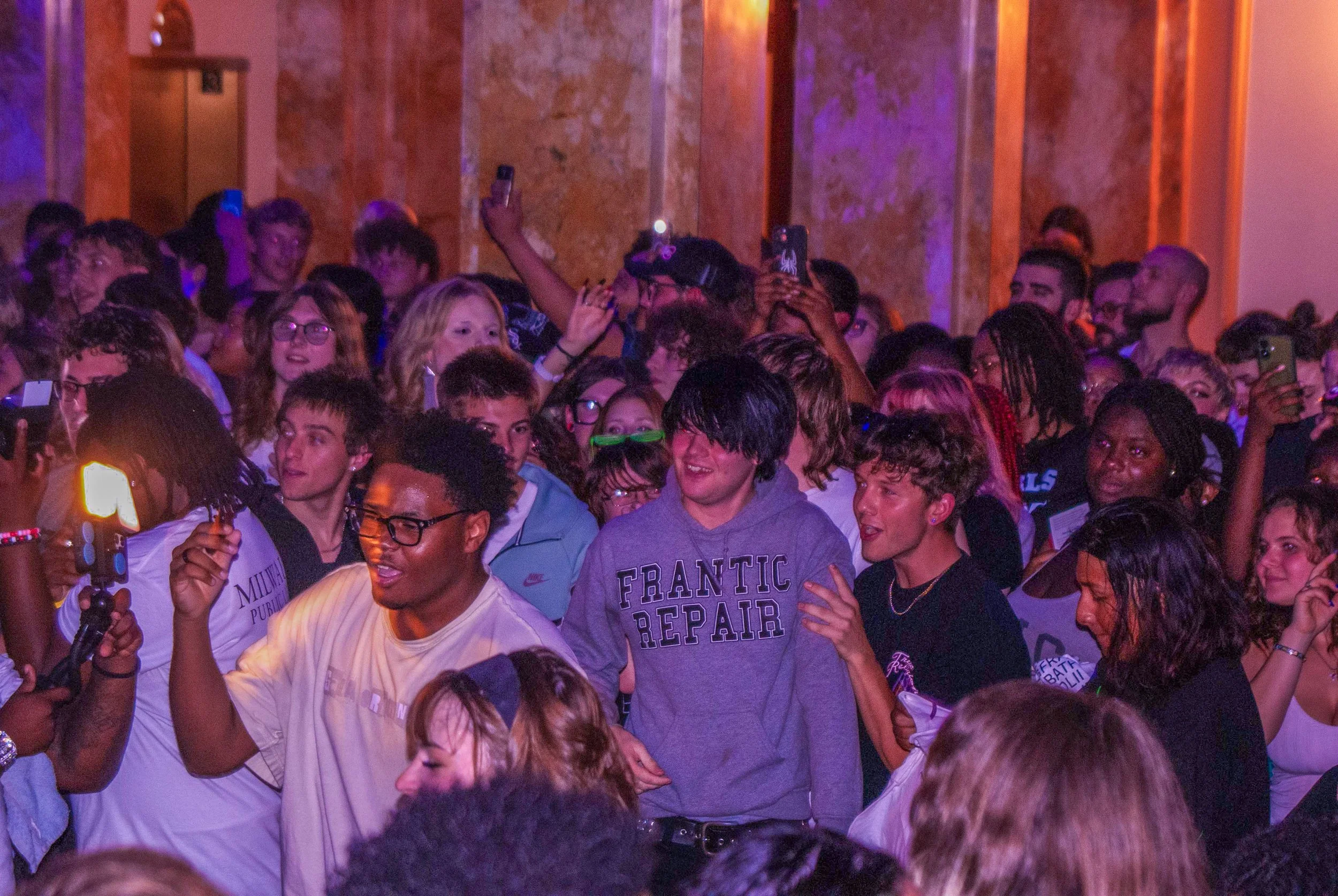
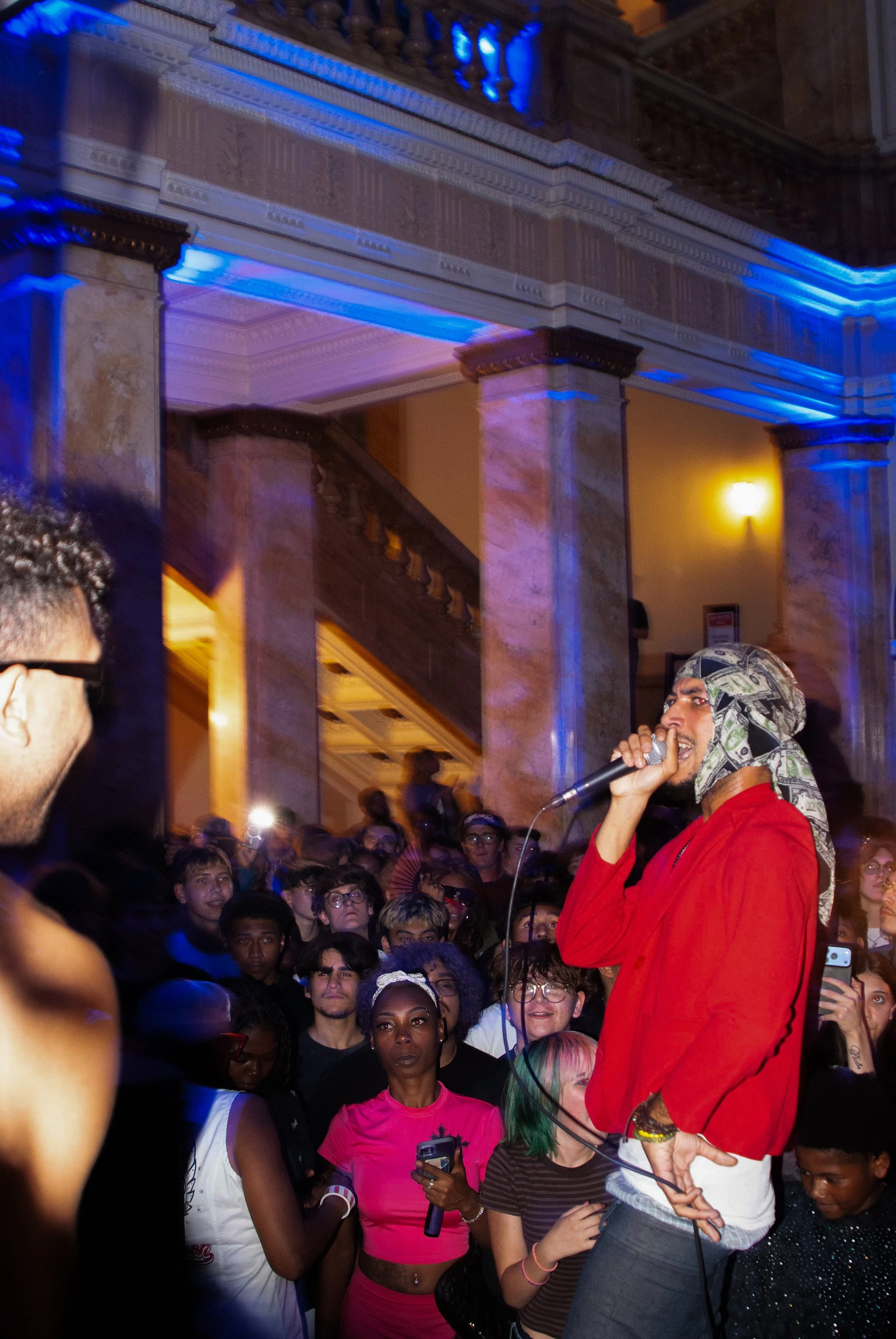
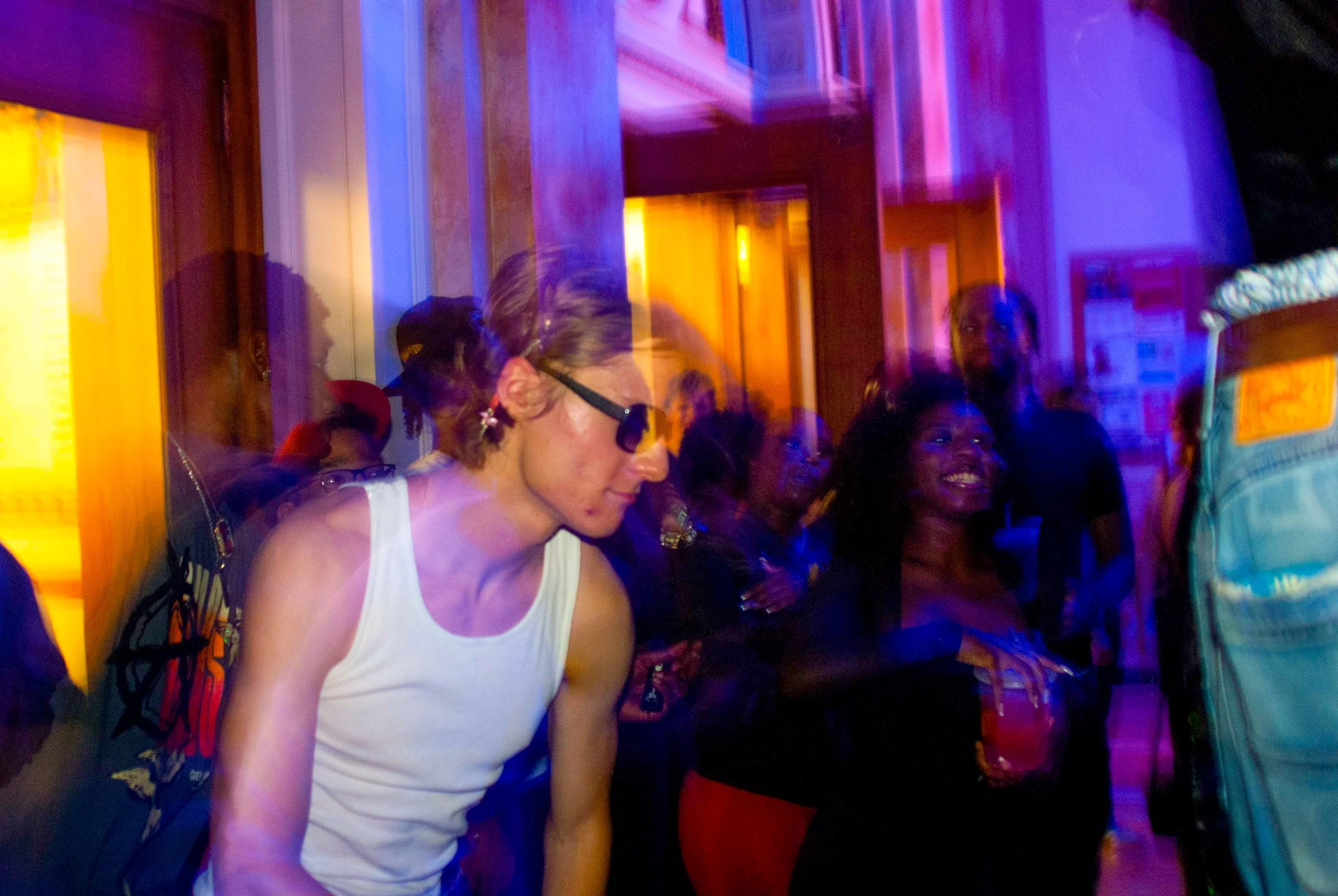
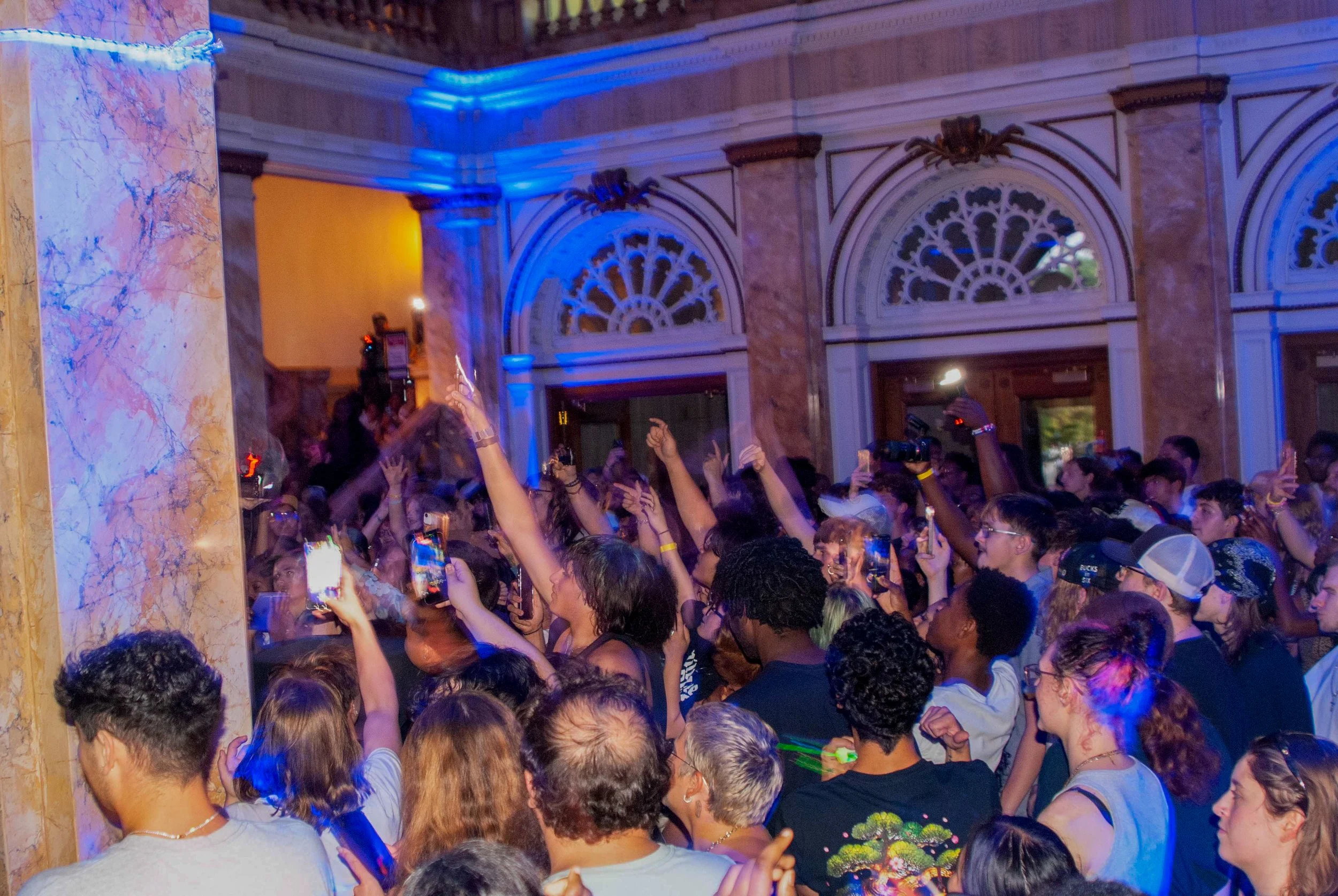
Lowend— an uptempo, danceable subgenre known for its eighth note claps and unserious lyrics — was on full display. Originally created in the early 2000s, the current generation of Milwaukee artists have made it their own, propelling Milwaukee rap to the mainstream in the 2020s. From the first beat the crowd never stopped moving, rocking the stage with its fast-paced rhythm. The performers weren't shy either, jumping with the crowd and even bringing them on stage. Every set felt like a collaboration — each performance had appearances from the other rappers. Behind the stage, kids took pictures with their favorite artists.
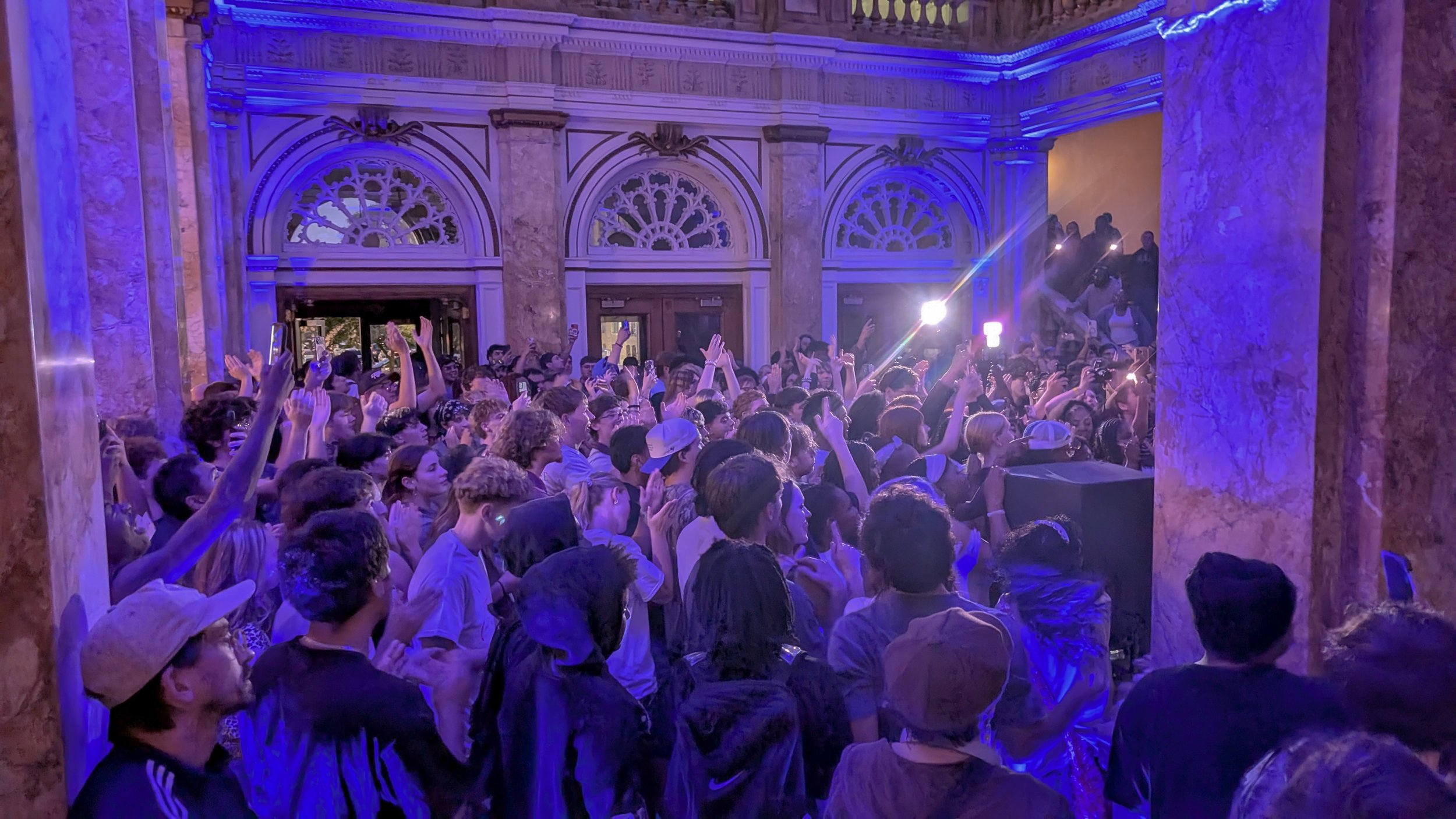
The crowd was a vibrant array of subculture: raccoon tail dyed hair, grungy jackets, locally-designed streetwear, jumpstyle pants, adults in their day clothes and kids in their school clothes. Every walk of life was represented. The diversity makes it hard not to reflect on the path Black music had to take to make it here. Milwaukee is infamously marred by redlining, and remains one of America's most segregated cities. Even as Milwaukee artists grow popular across the world, they continue to face pushback in the city–in the weeks before The Library Show, the banned music list from local bar The Garage was leaked. The contents were almost exclusively Black artists. Bold text at the bottom read “NO MILWAUKEE RAP.” But among the crowd of Milwaukee locals, you would never realize what the scene was going through. There was only excitement, joy and reverence in the community.
The energy of concerts and the quiet of libraries make them seem like opposites. But The Library Show, and the scene that made it happen, proved that they are not so different. By breaking traditional stereotypes, this night showcased the vibrant music scene of Milwaukee while bringing young community members to a space that has never before been used in this way.