The ROTTEN Issue: Leith Ross
Words AND PHOTOS BY AIDEEN GABBAI
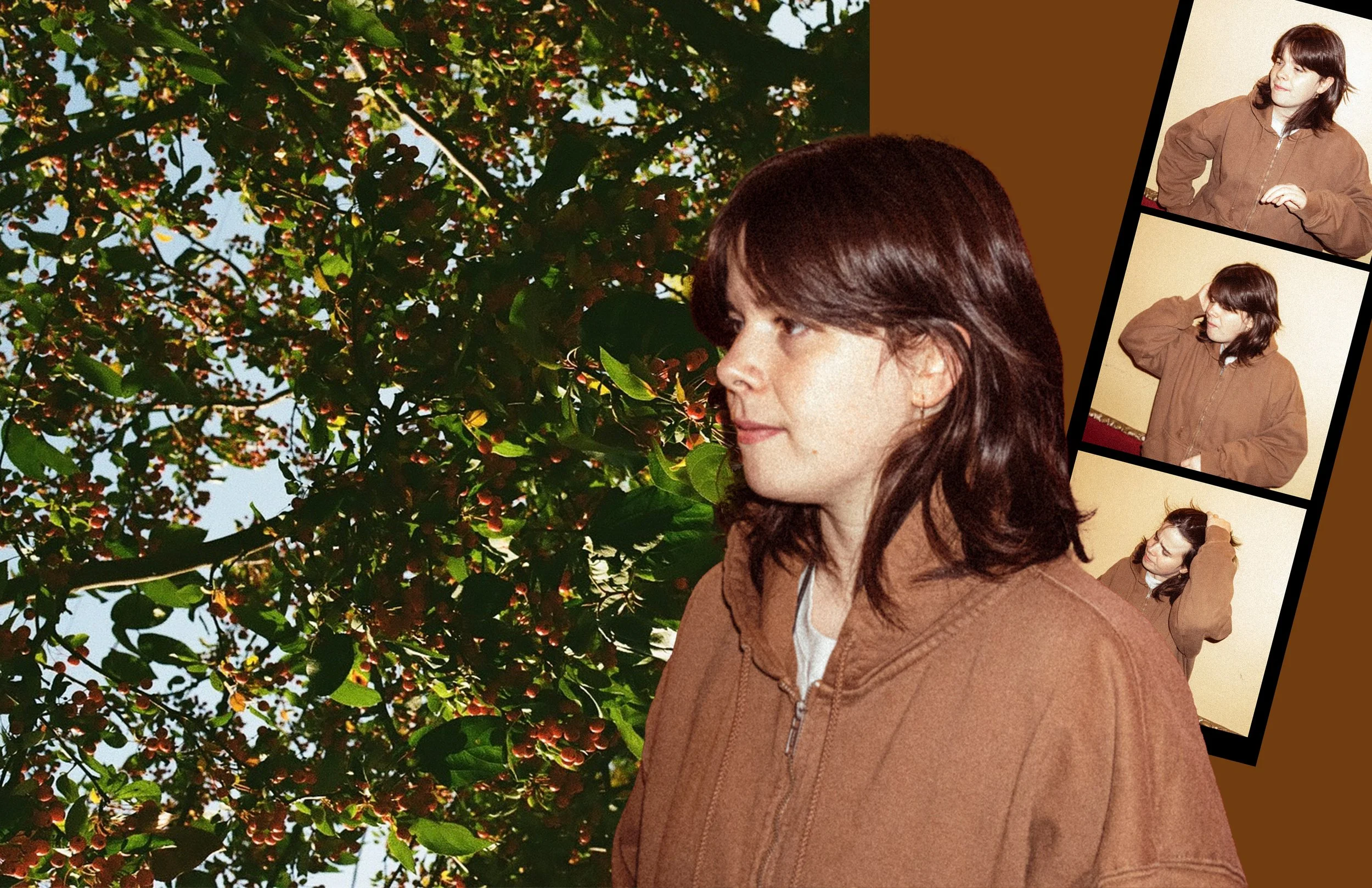
In a world of focus-group-tested music and lyrics that are broad and bland, Leith Ross excels at the personal. Their lyrics are diaristic and unflappably honest. Their album covers are unique collages made from their own photos. When they announced their departure from social media, they encouraged listeners to mail in CDs, letters and zines instead of sending DMs.
Ross is a Canadian folk artist based out of Winnipeg, Manitoba. Since they released their first EP Motherwell in 2020, they’ve evolved their music to combine elements of jazz, folk and rock, and have accrued a fanbase because of their devastating lyrics and openness online. After a couple of weeks of scheduling mishaps as the first leg of the tour was underway for their sophomore album, they sat down for an interview with EMMIE about their latest album I Can See The Future.
Ross is constantly writing — over the course of a year they might write a 100 songs about whatever is at the top of their mind. “All my songs, all the lyrics, melodies and accompaniment all come out at once for me,” Ross said, “I have to just sit down and write a full song and it usually happens in like an hour or two.” And after they write a song, they rarely edit later. Their reasoning: they imbue full trust into the person they were when they were writing the song. They don’t want to modulate or dilute their emotions later, for fear of losing the feeling of that particular instant.
Maybe this in-the-moment ethos is why their songs have the uncanny ability to render intimate, crushing performances. The lyrics often center around an instant of emotion or transformation; learning to deal with change, grief and the emotions you never expected to feel.
Something about folk draws huge audiences on TikTok. Songs by folk icons like Labi Siffe, Joan Baez, and Vashti Bunyan trend every other month, and some unknown artist can be trusted to rise out of the digital ether with devastating lyrics and a guitar every once in a while.
Leith Ross was one of the first to find their audience this way when they started posting on TikTok during quarantine. They would upload videos of songs they were working on in a bid to keep their career going after the pandemic stopped them from playing live. The very first song that caught the algorithm in a big way was “Music Box,” an ethereal song about a surreal dream, then waking up to find the real world again.
“‘Music Box’ was more just like an interesting experience.” Ross said. “It was just fun. People were using it for their little get-ready-with-mes and their videos of their walks through the forest. It wasn’t until “We’ll Never Have Sex” blew up that […] I was like, oh, okay […] I think something is shifting.”
“We’ll Never Have Sex,” the song that really brought Ross their moment, is characteristic of their discography: devastatingly earnest lyrics, hyper-delicate instrumentals and unmistakable emotion seeping from the track. The song confesses a desire for a relationship that goes beyond transactional intimacy, saying “If I said you could never touch me/ you’d come over and say I looked lovely.”
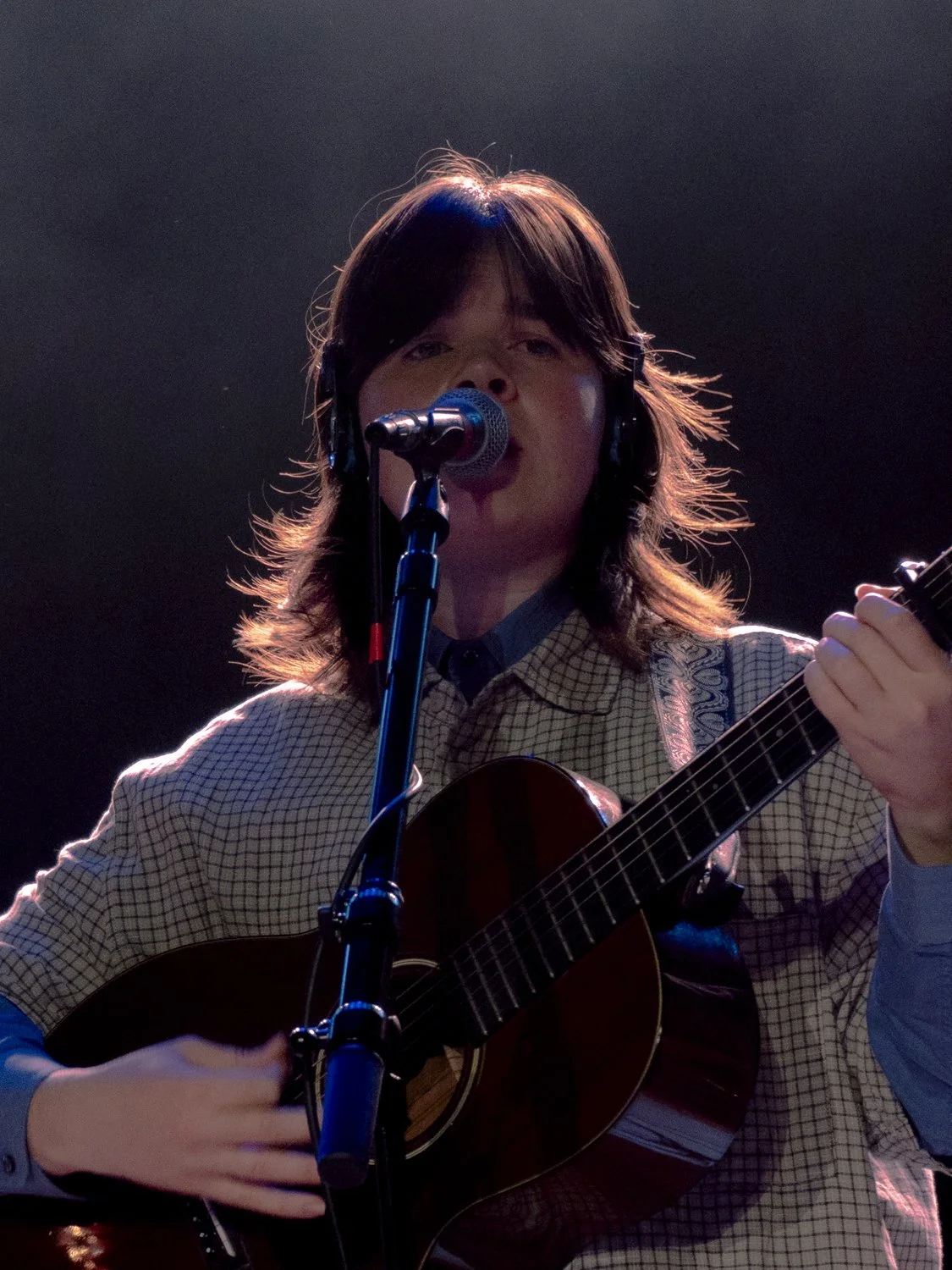
This gut-wrenching honesty connected with a huge swathe of people, who are still fans two albums and four years later. At Ross’ Madison show in October, the energy of the crowd was electric and hyper. Truly, there might never have been a crowd so rabid for folk. When the band played the opening chords for the hit “You (On My Arm),” a girl in the crowd jumped at least 3 feet into the air.
Ross has leveraged the large following they’ve built for advocacy, donating part of merch sales to local charities at each tour stop, often with an emphasis on helping queer youth. They are vocal on social media promoting fundraisers or spreading information about political causes, like queer rights or speaking out about genocide in Palestine, encouraging their listeners to get involved. For example, when Spotify Wrapped was released, they posted a story thanking people for all the love and support, but went on to encourage people to find other routes of listening to music, because of the role that Spotify has played in preventing artists from being fairly compensated.
Speaking on the role artists play in the world of activism, they said “I think that everyone underestimates their own personal responsibility about being a good community member [...] It’s less my responsibility as an artist and more, how can I use my specific resources to take up the torch of my responsibility as a person?”
However, with the platform comes the pressure of the audience. When Ross posts a TikTok of a song they’re working on, it’s always accompanied by their guitar and nothing else. However, when they’ve gone to release fully-produced tracks, adding other elements like synths, drums, and violins, they’ve received a lot of irritation from fans. In any video they post of what they’re working on, there are always a slew of people who say things along the lines of “don’t change anything” or “put this version on spotify noww!!!”
“I think that TikTok has kind of created this fascinating thing where people think that acoustic versions of songs are the song itself and that a fleshed-out, arranged and produced version of this song is something different,” they reflected. They confessed that this reaction frustrated them at times, but that thankfully they found that most of their ride-or-die fans were happy to have the duality of both versions of their songs. The opinions of the online audience have thankfully not stopped Ross from adding those more complicated production elements, and that’s in fact one of the most integral parts of their new album.
Working with Vampire Weekend’s Rostam Batmanglij (better known as just Rostam) as a producer on I Can See The Future, Ross’ characteristic songwriting is newly framed by lusher, more expansive production. Where their debut album To Learn leaned into melancholy and folk, this album opens up to different genres and emotions. The album is a rock-jazz-folk meld that explores ideas of community, growth and the ever-changing nature of the past.
Compared with To Learn, which focused more on the growing pains of a young adult exploring the wider world, I Can See The Future expands outwards, looking past the self, and seeks to understand how Ross can be a better member of their community, both on the interpersonal level and more broadly. Despite the conceptual cohesiveness of both albums, Ross says this was more incidental than planned. “I have never written an album like a concept record. I’ve never written a set of songs that I knew were going to be on the same project where I wanted to talk about specific things.” They say that the reason the songs mesh together is simply because they encapsulate a particular phase of their life and the themes that were on their mind at the time.
As an album, I Can See The Future is infused with a radical optimism that feels almost impossible right now. It ushers the listener through heavy topics like grief and the singularity of consciousness, while also reminding the listener of how much power love and community hold to combat these forces.
The album starts on a song called “Grieving”, which isn’t as dour as it might sound at first. The song is guided by a beautiful violin, and expresses Ross’ desire to love the people in their life more fully, that if they can only find the courage to say all the things they wanted to say to someone while grieving, Ross has decided that “I’ll love after I’m dead, and I’ll grieve while I’m alive.”
As the album progresses, the theme that keeps coming up over and over is the ways that our care for each other deeply enriches our lives. The fourth track “Stay” is an ode to friendship and the uncompromising ways in which people come together. The song starts off slow and pensive, and halfway through, moves into a groovier beat with a steel guitar accompaniment. “I Will” and ““What Are You Thinking About”” sit next to each other in the tracklist, and while the former is about the paradox of still having a lot of love for someone who’s hurt you and hates you, and what you gained from that love, “What Are You Thinking About” is simpler, iterations of what Ross tells their partner when they ask the titular question, and even when the answer is unpleasant.
“It’s less my responsibility as an artist and more, how can I use my specific resources to take up the torch of my responsibility as a person?”
The title track and the final one on the album, “(I Can See) The Future,” talks about a utopian world in the future, where everyone in the current world is gone, and the world has transformed into something new. Accompanied with imagery in their lyrics of plants growing between the bricks of abandoned prisons and the still present arrival of winter, there’s a real kind of catharsis that comes when they sing “All the walls were just stone/ All the people came home/ It was so long ago.”
Upon the release of this first single, Ross wrote that the song “is about Land Back globally, it’s about the end of policing and prisons, it is about reparations and decolonization in ALL its forms.”
Part of the power of music and art in general is its ability to envision what people can’t for themselves. Accompanied by the ebbing and flowing instrumentals, culminating in an ecstatic crescendo of layered vocals and instrumentals at the end of the song, that future feels close and possible past all reasoning, and, as Ross said, “inspires you to do the work, everyday, to bring it about.”
When asked how they went about transforming all these difficult feelings or experiences in their songs to something that feels hopeful, they responded:
“Man, just in general, in my life, I’m obsessed with change. And sometimes it’s like, not obsessed in a good way, but there is no moral weight on that.
“So even when it’s bad and I’m terrified of it, I’m just still fascinated by it and how it affects our lives, and passionate about trying to find a way to experience it that feels good.”
“Man, just in general, in my life, I’m obsessed with change. And sometimes it’s like, not obsessed in a good way, but there is no moral weight on that.