
Henry Verus' new EP "Evergreen Park" confronts masculinity and vulnerability
Words AND INTERVIEW by DANIA AMRA, PHOTOS BY BRYANT WOOLCOCK
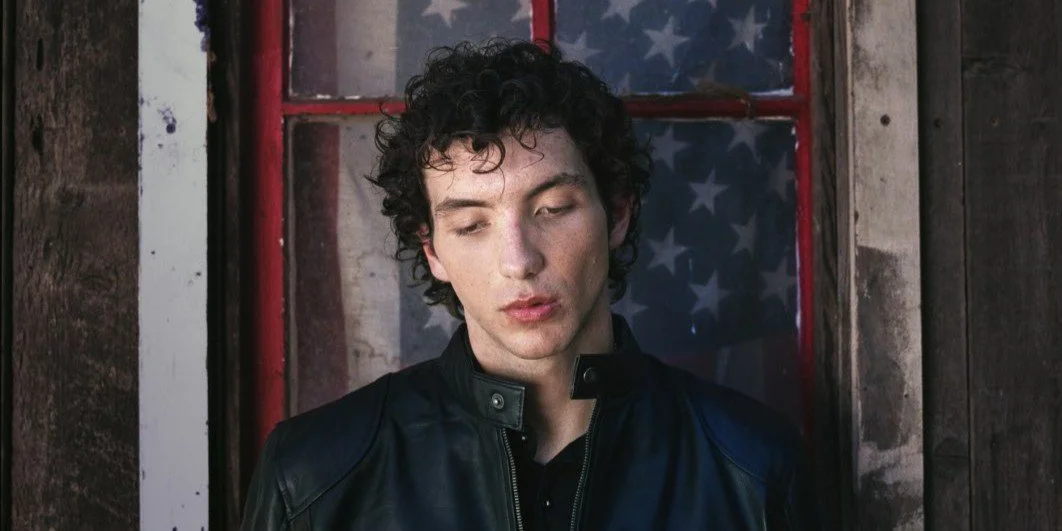
Henry Verus | Bryant Woolcock
Today Henry Verus released his new EP Evergreen Park. The collection offers a reflection of the experiences, expectations and personal growth that have shaped him. Written over the past three years, the project brings together songs from different periods of his life, capturing the uncertainty and formative experiences that influenced who he is today.
Foremost among the songs on the EP is his latest single, “Be A Man,” which explores the expectations placed on men and the responsibility that can come with carrying them. For Verus, being a man has never been entirely separate from the expectations that come with it. Growing up, success was something he was encouraged to pursue through sports, school and, eventually, music. But as he got older, he’s had to reconsider what those expectations mean.
“I think very early on I had some very good male role models,” Verus says. He points to his father and older brother, alongside his mother and sister, as important influences growing up. His parents placed an emphasis on success, although not necessarily in the monetary sense. He says that expectation followed him through different parts of his childhood, particularly as he developed a competitive nature through baseball and school. “I just was so consumed with succeeding.”
Over time, however, he says that his desire to succeed became more complicated. What initially felt like a personal expectation gradually extended into a responsibility to help others succeed as well. In “Be A Man,” Verus examines how easily those expectations can become internalized, even when they were never his own to begin with. The song considers the pressure behind a phrase that’s often used to define how men should behave, while questioning what it actually means to live up to it.
For Verus, part of that expectation comes from the assumption that masculinity and vulnerability exist separately. Although he doesn’t believe men are necessarily punished for expressing their emotions, Verus recognizes seeing men in vulnerable situations can still feel unnatural, “those aren’t necessarily synonymous,” he says, referring to vulnerability and masculinity. Through songwriting Verus has begun to reconsider the distinction.
“I’ve realized with my songwriting that the more that I talk about [vulnerability], the more that I write about it, the more I’m doing the most masculine thing [I can].” Rather than approaching vulnerability as something that contradicts his identity, Verus has found a way to incorporate it into his understanding of masculinity. He describes himself as expressive even as a child, recalling how he would sing and dance growing up and openly share his feelings with friends and family. Verus says that becoming an artist has simply given him more opportunities to lean into that part of himself.
Verus’ willingness to explore different sides of his identity also extends to his musical influences. Growing up in Chicago, he was surrounded by rap music. His father introduced him to artists like Curtis Mayfield and Donny Hathaway, but his mother played Carole King, exposing him to a different approach to emotional songwriting. Finding a way to bring those influences together wasn’t immediate. For a long time, he struggled with the idea of settling into one sound and allowing people to identify him with it.
“I think that made me feel boxed in for a really long time,” Verus says. However, he says now he feels more confident in the sound he’s developed. Rather than limiting himself to one genre or influence, he’s created a musical identity that allows him to explore different parts of himself while maintaining consistent direction.
His relationship with creative control has also changed. While Verus once felt the need to oversee almost every decision, he now recognizes the importance of working with people he trusts and remaining open to their ideas. This approach carries into Evergreen Park, which brings together songs written at different points in time. Although Verus initially viewed them as separate representations of different periods in his life, he now sees them as connected experiences that have shaped who he is today, “Whenever I think it’s that complicated, they're all segments of who I am today.”
Evergreen Park also reflects Verus’ changing relationship with the places he considers hope. Although he currently lives in Los Angeles, Chicago remains an important influence on his songwriting. He wrote “Be A Man” in Los Angeles while drawing on memories of the people he loves and the environment in which he grew up in. He describes how the atmosphere surrounding him can influence the tone and production of a song, noting that Chicago and Los Angeles inspire different musical environments.
One track in particular, “She Looks Like Chicago,” stands out to Verus as a representation of where he wants to take his music. The lyrics and musical direction draw from his family, upbringing and the city that shaped him. Regardless of where his career takes him, he considers those influences a lasting part of his identity.
While Evergreen Park reflects on the experiences that have shaped him, Verus is also interested in what comes after it. He describes the past several months as a period of great certainty, particularly in his personal life and creative process. His sobriety has become an important part of that change, giving him a new perspective on what he wants to accomplish as a songwriter and performer. Verus is less concerned with commercial success than with understanding how much further he can develop creatively.
For an artist whose work has increasingly centered on introspection, Henry Verus’ willingness to confront discomfort is especially significant in Evergreen Park. “Be A Man” doesn’t attempt to provide a definitive answer to what masculinity should look like. Instead, the song questions the expectations that have long accompanied it, allowing vulnerability to exist alongside the desire to succeed. As Evergreen Park brings together different periods of Verus’ life, it also marks a point at
which he seems more comfortable accepting the contradictions within himself. Rather than viewing these experiences as separate versions of himself, Verus now recognizes them as connected parts of the person he is today and the artist he continues to become.